
Jenkins Criminal Court Records
A Jenkins County criminal court record is the case-level file kept by the court once a criminal matter reaches the clerk and judge. It is broader than a charge list and different from a jail roster. The record can include the accusation or indictment, bond orders, arraignment entries, motions, hearing notices, plea forms, trial results, sentencing sheets, probation terms, fine or restitution orders, and final disposition.
Georgia's hierarchy controls where the criminal court record lives. Jenkins County is in the Ogeechee Judicial Circuit, and Superior Court is the general-jurisdiction trial court for felony prosecution. State Court may handle misdemeanors, traffic, dispossessions, and civil actions not reserved to Superior Court where those cases are filed. Magistrate Court can be involved with arrest warrants, search warrants, preliminary hearings, bond, and certain lower-level matters. City of Millen citation records may remain in Municipal Court.
Search Jenkins Criminal Records
The main official online route for Jenkins County criminal court records is the Georgia Courts E-Access to Court Records provider index for Jenkins State and Jenkins Superior. The Georgia Courts e-file chart lists Jenkins State Court and Jenkins Superior Court with Odyssey eFileGA, PeachCourt, and GreenFiling/InfoTrack. These systems can involve redirects, accounts, provider rules, and document access limits.
- Identify whether the criminal case is felony, misdemeanor, citation, warrant, or Municipal Court related.
- Use the Georgia Courts E-Access route for Jenkins State or Jenkins Superior case access when the case belongs there.
- Search by defendant name, case number, filing year, or court if the provider offers those fields after login or redirect.
- Read the docket for charges, plea, hearing dates, disposition, sentence, and any probation or fine entries.
- Contact the Clerk of Superior Court for certified copies or records not visible online.
For the charging side of a case, use Jenkins County arrest records and court charges. For active custody or jail status, use Jenkins County inmate records. For warrant status, use the sheriff or court channel described on Jenkins County warrant records.
Criminal Case Flow
A Jenkins County criminal case can begin with an arrest, warrant, citation, or law-enforcement report, but the court record becomes useful once formal charges and docket activity appear. A felony may start with Magistrate Court warrant or first-appearance events, then move to Superior Court for prosecution by the Ogeechee Judicial Circuit District Attorney. Misdemeanor and traffic cases may remain in State, Municipal, Probate, or Magistrate Court depending on the offense.
Case flow: Charges Filed › Arraignment › Pretrial / Motions › Plea or Trial › Disposition › Sentencing
| Stage | What Happens |
|---|---|
| Charges Filed | The accusation, indictment, citation, or complaint identifies the charged offense and begins the court case path. |
| Arraignment | The defendant is formally advised of the charge and enters a plea such as guilty, not guilty, or nolo contendere. |
| Pretrial / Motions | Attorneys file motions, request discovery, argue bond, seek suppression, or ask the court to decide legal issues. |
| Plea or Trial | The case is resolved by plea, bench trial, jury trial, dismissal, or another court-approved outcome. |
| Disposition | The charge or case receives a final outcome such as guilty, dismissed, acquitted, nolle prosequi, or transferred. |
| Sentencing | The court records jail, prison, probation, fines, restitution, community service, or other ordered terms after conviction. |
What Jenkins Criminal Records Show
Criminal court records are read field by field. A single defendant can have several charges in one case, and each charge can have its own status or outcome. The case docket may also include bond, motion, hearing, plea, sentence, and payment entries. The table below reflects typical Jenkins County criminal court record fields based on Georgia court practice and the official court systems located in the research.
| Field | What It Shows |
|---|---|
| Case Number | The court or provider number assigned to the criminal case. |
| Defendant | The person charged, with identifying details limited by public-access rules. |
| Charges | The offense names, statute references, severity level, or count numbers filed in court. |
| Bond | Bond amount, conditions, release status, or no-bond order when entered in the file. |
| Plea | Guilty, not guilty, nolo contendere, or other plea entries. |
| Disposition | The outcome for each charge or the case, including dismissed, nolle prosequi, guilty, not guilty, or acquitted. |
| Sentence | Jail, prison, probation, fines, restitution, community service, or other ordered punishment. |
| Restrictions | Sealed, juvenile, redacted, or restricted items that are not visible in public access. |
Charges vs Convictions
A criminal charge means the state or another prosecutor has accused the defendant of an offense. A conviction means the charge ended in a guilty plea, guilty verdict, or other conviction result. Jenkins County criminal court records can show both. A record may list charges that were amended, reduced, dismissed, nolle prossed, or resolved in a way that is not a conviction.
| Charge | Conviction | |
|---|---|---|
| Stage | Filed before final outcome. | Entered after plea, verdict, or adjudication. |
| Meaning | An accusation that must still be proven or resolved. | A court outcome finding guilt or accepting a guilty plea. |
| Record Use | Useful for tracking allegations and case progress. | Used to read sentence, probation, fines, and criminal-history consequences. |
| Public Risk | Can be misunderstood if read without disposition. | Still may be subject to appeal, correction, restriction, or later relief. |
Read Dispositions and Sentences
Disposition is the final outcome of a charge or case. Common outcomes include guilty, not guilty, dismissed, nolle prosequi, acquitted, transferred, or bound over. Sentencing is the punishment or court order that follows conviction. A sentence can include jail, prison, probation, fines, restitution, community service, classes, no-contact terms, or other conditions set by the judge.
Georgia court records may also show probation and fine orders through standing-order or clerk entries. The research found Ogeechee Circuit standing-order material with Jenkins-specific categories such as felony probation/fines, but some circuit pages were not fully accessible during screenshot capture. When a sentence or probation term matters, ask the clerk for the certified sentencing sheet or final disposition.
Sealed vs Restricted Records
Georgia often uses the term record restriction instead of expungement in the older everyday sense. The Georgia record restriction guide says eligible criminal-history records can be hidden from public access while remaining available to judicial officials and criminal justice agencies. The process can depend on the arrest date, prosecutor approval, fees, and GCIC processing.
Georgia's official record restriction guide is the state source for checking whether a criminal-history record can be hidden from public access.
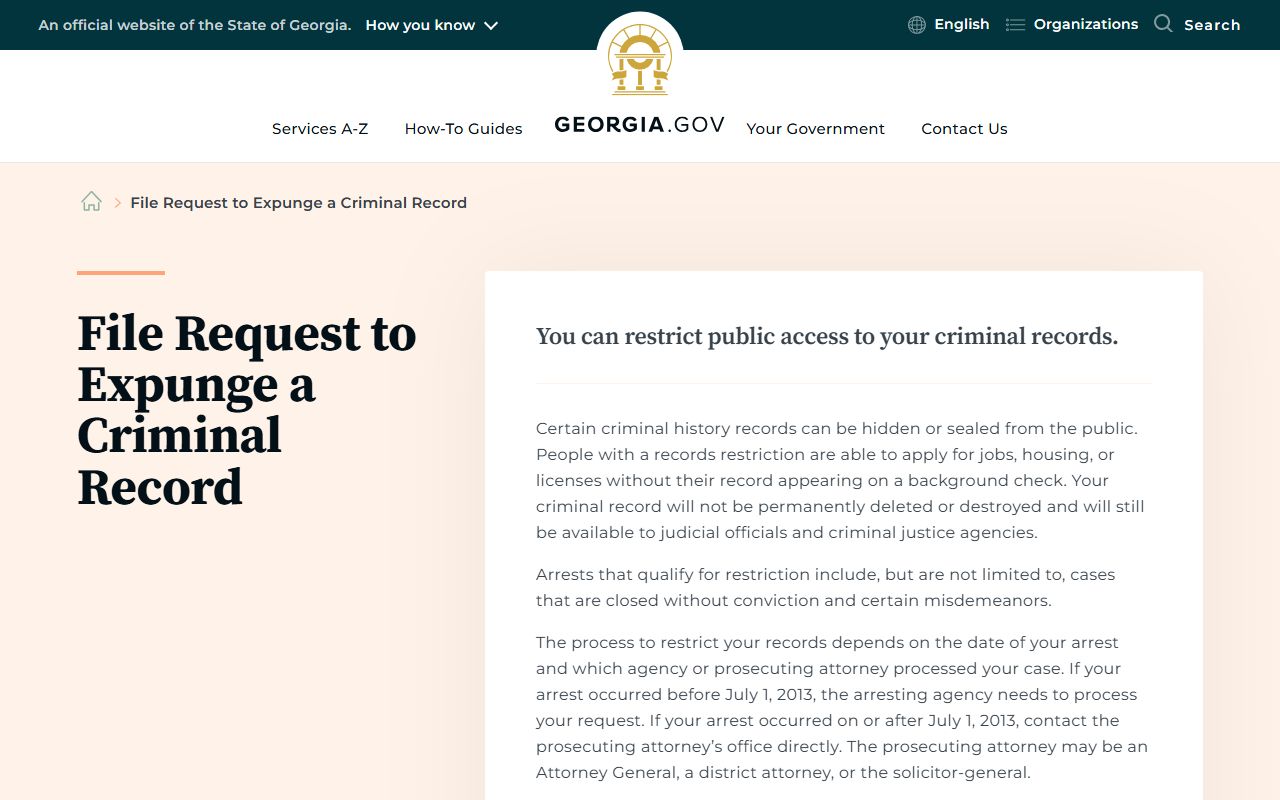
That state process is important because a public criminal court search may not show every restricted arrest or case history entry.
| Sealed or Restricted | Expunged Term | |
|---|---|---|
| Visibility | Hidden or limited in public access by law or order. | Often used by the public to mean removed from public view. |
| Georgia Effect | Record may remain available to courts and criminal justice agencies. | Do not assume physical destruction of the court file. |
| Eligibility | May apply to eligible arrests, closed cases without conviction, and some misdemeanors. | Depends on Georgia record restriction law and court/prosecutor action. |
Public Criminal Record Access
Georgia public access law is based on the Georgia Open Records Act, O.C.G.A. 50-18-70 through 50-18-74, and related court-record rules. The Act presumes agency records are open unless a law, court order, privacy rule, investigation exemption, or confidentiality rule applies. Criminal court records should be requested from the court custodian first, not from a generic background-search site.
Key statutes: O.C.G.A. 50-18-70 et seq. addresses open records, O.C.G.A. 50-18-72 lists exemptions, and O.C.G.A. 35-3-37 covers Georgia criminal-history record restriction.
The GBI Sex Offender Registry information page is a separate statewide public registry source, not the Jenkins County criminal court case file.
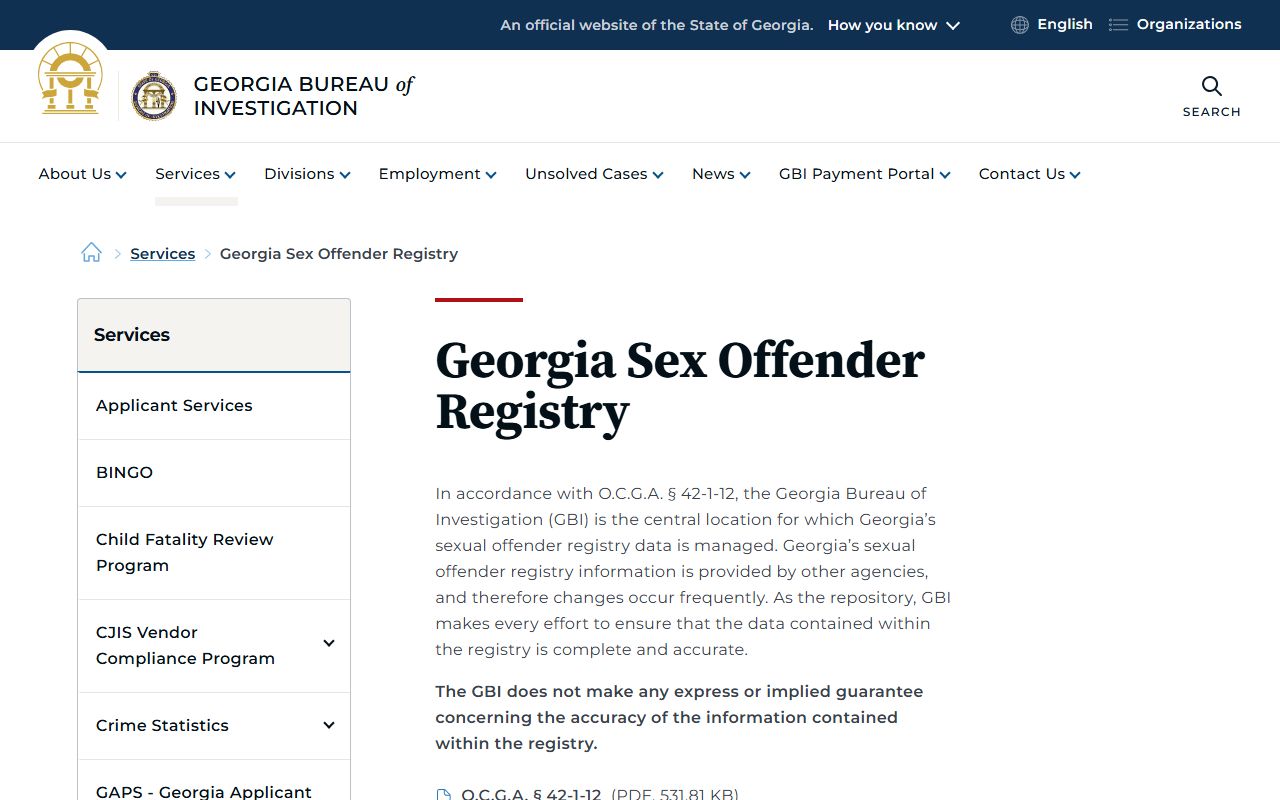
Registry information can overlap with convictions, but it should not be treated as a full criminal docket or sentence record.
Background Check Limits
A casual criminal court record lookup is not the same as an FCRA-compliant consumer background check. Court records can be incomplete, out of date, restricted, or misread when charges are not matched to final dispositions. Employers, landlords, insurers, lenders, and other regulated users need proper consumer-reporting procedures and cannot rely on a public docket summary as a substitute.
The Georgia Sex Offender Registry public search is the official registry search route for qualifying registry records.
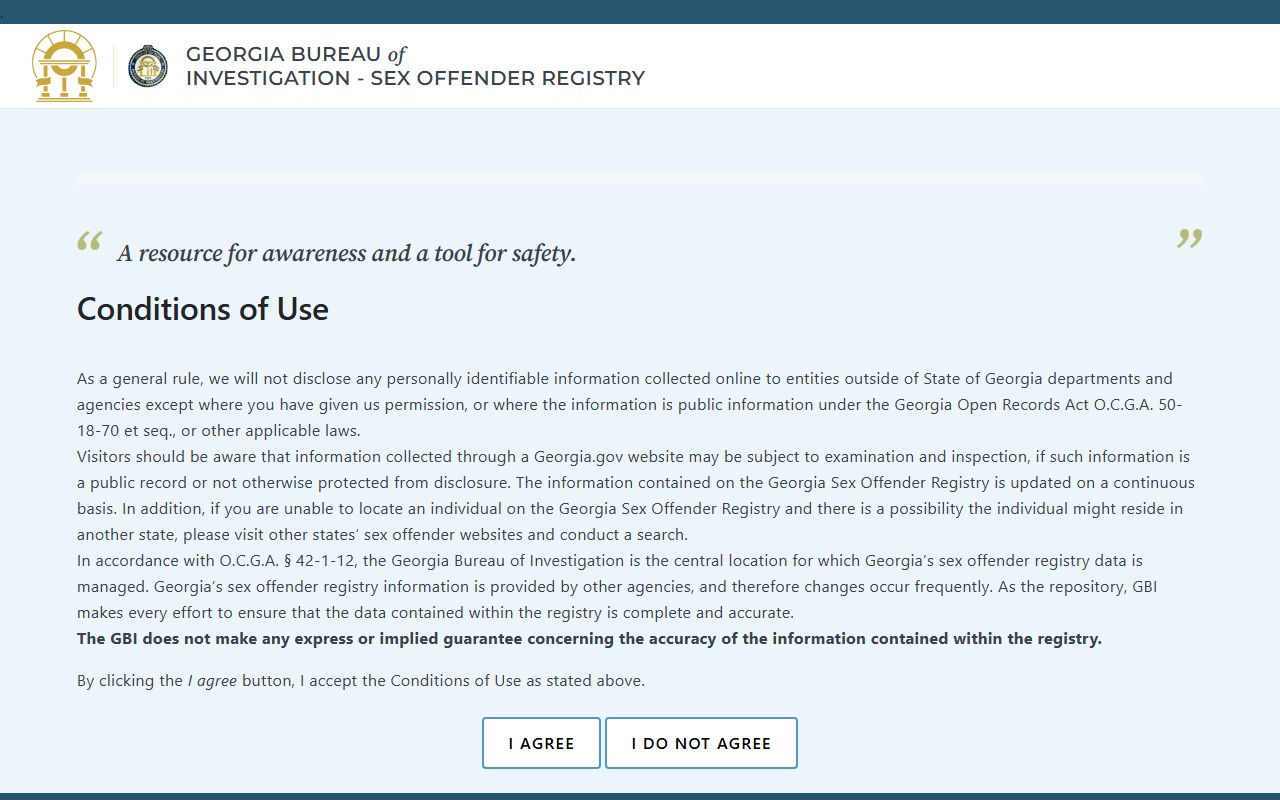
Registry searches use separate data supplied by multiple agencies and are governed by their own conditions of use and accuracy warnings.
Important: Do not use public criminal court lookups for employment, housing, credit, insurance, or tenant screening decisions.
Prosecution and Defense Offices
Jenkins County criminal prosecutions at the Superior Court level involve the Ogeechee Judicial Circuit District Attorney. Research identified Robert Busbee / D. Robert Busbee in recent official circuit materials. The DA office is listed at One Courtland Street, Statesboro, GA 30458, phone 912-764-9924. The office handles state criminal prosecutions for Bulloch, Effingham, Jenkins, and Screven counties.
The Georgia Public Defender Council office finder is relevant when an indigent defendant needs appointed counsel information.
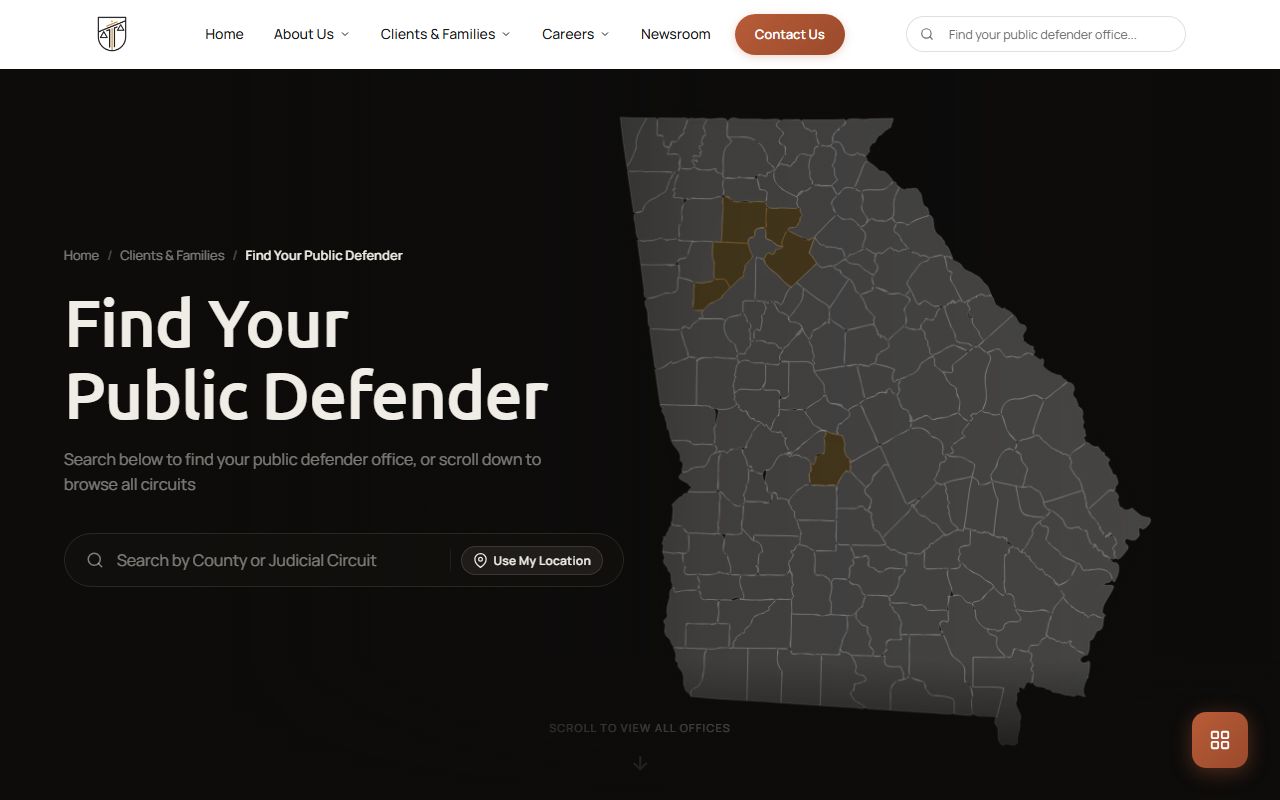
The Ogeechee Circuit Public Defender office is listed at 30 N. Main St., Statesboro, GA 30458, phone 912-764-6292, and serves Jenkins County along with other circuit counties.
Restricted Jenkins Criminal Records
Juvenile cases, sealed cases, adoption-linked files, mental-health material, personal identifiers, minor names, and records restricted under Georgia law may not appear in a public criminal court records search. Active investigations can also limit access to law-enforcement material. A public court docket may show less detail than the clerk file, and the clerk may redact before releasing copies.
Agency news is not the same as a court file. The GBI Jenkins County-related press release is an agency news source, while the court record must still be checked through the court.
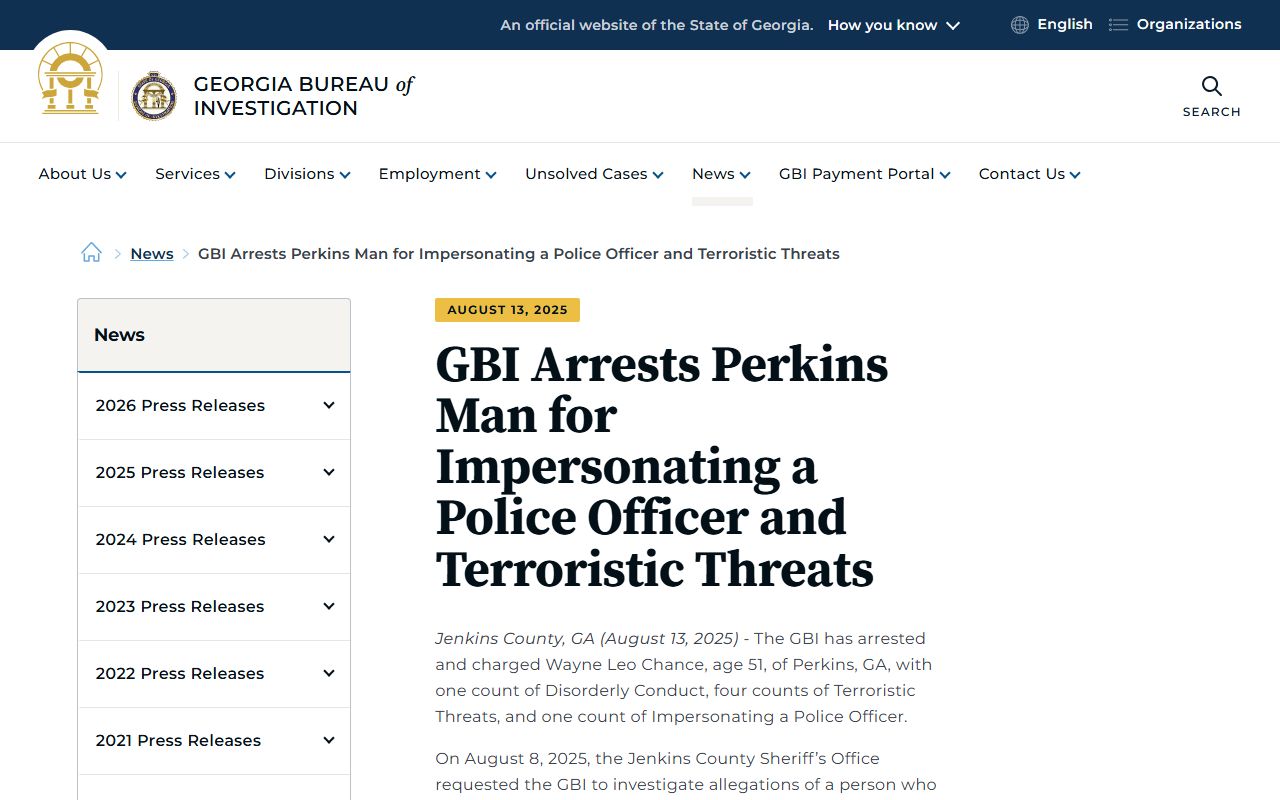
Agency press material can point to an arrest or prosecution, but disposition and sentencing are verified through the court record.